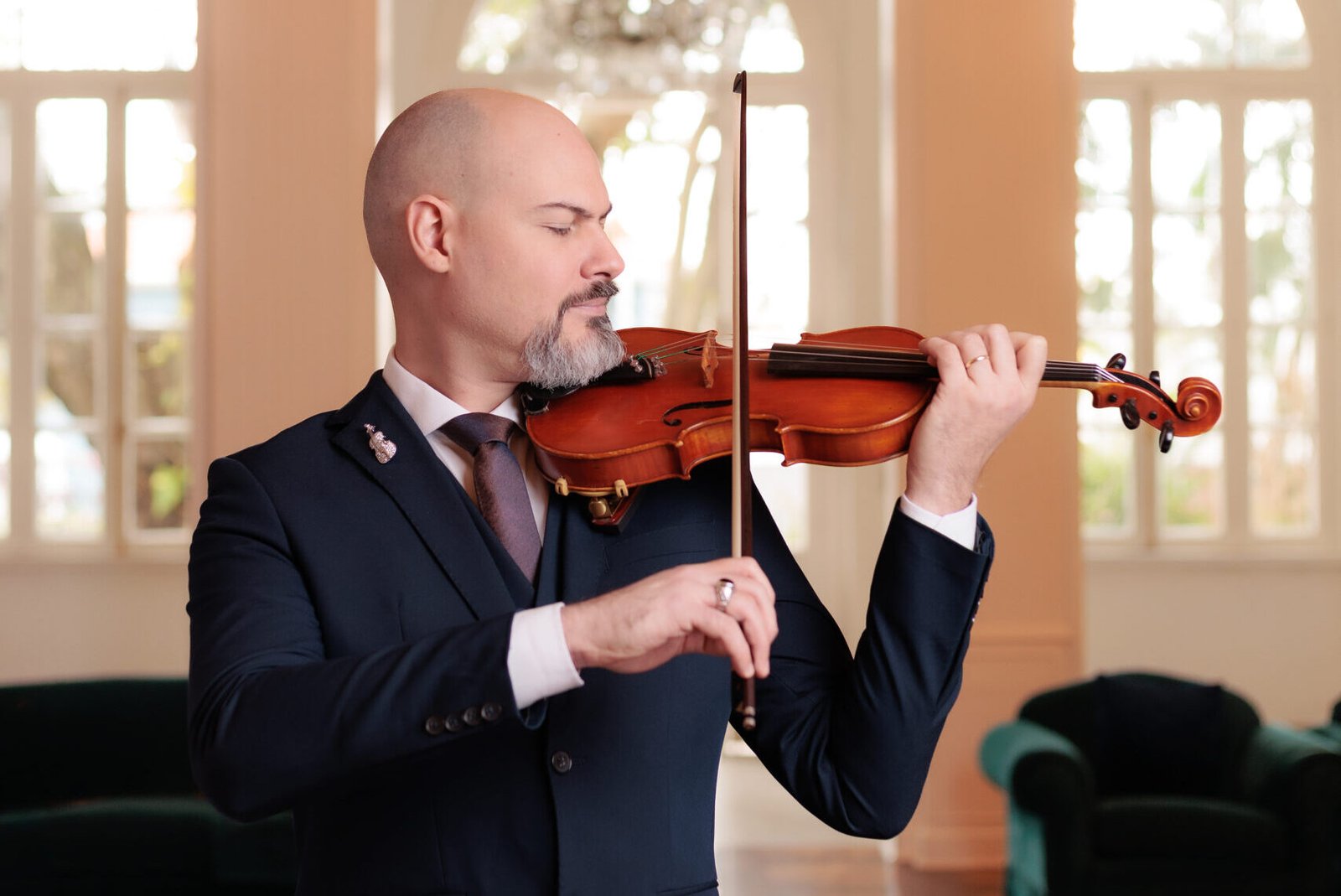
Many adults wonder whether it is realistic to learn violin at 40, especially if they have no previous musical experience or are returning after many years away. Much of the language surrounding violin study can reinforce the idea that starting later is unusual: early training, young talent, childhood development, conservatory preparation.
But beginning later does not make serious violin study unrealistic. It simply makes it different. For an adult, the more useful question is not whether you started early enough. It is what kind of musician you would like to become from where you are now.
What Adults Bring to Violin Study
Adults do not arrive at the violin empty-handed. They bring years of listening, cultural experience, concentration, professional discipline, emotional maturity, and often a much clearer sense of why they want to study music in the first place.
These qualities matter. A child may absorb certain physical patterns quickly, but an adult can often understand the purpose behind an exercise, recognize musical relationships, compare interpretations, and make deliberate choices about sound and phrasing.
That intellectual and musical awareness can become an important part of the learning process. The objective is not to imitate the way a seven-year-old learns. Adult students deserve an approach designed around adult learning.
The Physical Side of Starting Later
The violin is physically demanding. Coordination between the two hands, balance of the instrument, bow control, intonation, and the development of reliable movement patterns all take time. There is no reason to pretend otherwise.
But technical demands can be approached progressively. Good technical work for an adult should be progressive and precise. Instead of rushing toward repertoire that the body is not yet prepared to manage, the student builds a dependable physical foundation: posture, balance, left-hand organization, bow distribution, sound production, and coordinated movement.
Progress becomes much more sustainable when technique is understood as something developed over time rather than a collection of problems to overcome as quickly as possible.
You Do Not Need Professional Goals
Many adults hesitate to begin because they assume serious study must ultimately lead toward professional performance. It does not. You can study the violin seriously without wanting a professional career.
Serious musical education can mean learning how to produce a more beautiful sound, understanding the structure of the music you play, developing reliable technique, exploring significant repertoire, listening more critically, and gradually becoming a more independent musician.
The absence of professional ambition does not make these goals less meaningful. You don’t have to be a professional musician to deserve a serious musical education. This idea is explored further in What Does Thoughtful Violin Study Look Like Without Professional Goals?
Progress Looks Different for Every Adult
Adult students arrive with very different circumstances. Some have never played an instrument. Others studied music decades earlier. Some have several hours available for practice each week; others are balancing work, family, travel, and other responsibilities. For that reason, progress should not be measured against an abstract timeline. A better measure is continuity. The amount of practice required also depends on how that available time is used.
Are your movements becoming more organized? Is your sound becoming more controlled? Are you hearing intonation more clearly? Can you recognize differences between interpretations? Are you approaching repertoire with greater understanding than you did six months ago? These changes may seem gradual, but together they represent real musical development.
Listening Becomes Part of Learning
One advantage of learning as an adult is the ability to engage consciously with recordings and performances. Listening should not simply mean finding a recording and copying it. A student can learn to notice articulation, tempo, phrasing, character, sound production, rhythmic flexibility, and differences in musical conception between performers.
Over time, these comparisons help develop musical discernment. This is one of the places where adult experience can become an advantage. You are not only learning how to move your fingers and bow. You are developing an increasingly informed relationship with music itself.
Choosing Repertoire Carefully
Adults sometimes arrive with a list of pieces they have always wanted to play. That desire is valuable and should remain part of the process. But repertoire works best when it serves both musical interest and technical development.
The right piece at the right moment can introduce a new bow stroke, strengthen a left-hand pattern, develop phrasing, or open a new stylistic world. A thoughtful course of study therefore balances aspiration with sequencing. The goal is not simply to accumulate pieces. It is to build the skills that allow increasingly demanding music to become genuinely playable and musically meaningful.
What Can You Expect When You Learn Violin at 40?
There is no single answer. For one student, success may mean playing confidently in a community orchestra. For another, it may mean returning to chamber music, playing Bach with greater understanding, preparing repertoire for informal performances, or simply having a demanding musical practice that remains part of life for decades. Choosing the right teacher can make that process more focused and personally meaningful.
What matters is that the goal belongs to the student. Beginning at 40 does not require pretending that age is irrelevant. It means recognizing that musical development remains possible well into adult life, while allowing the process to reflect the realities, strengths, and ambitions of an adult learner.
The violin may be challenging. That is also part of what makes studying it worthwhile.